The produce aisle
Bagged greens go slimy fast. The reason has nothing to do with your fridge.
What happens between the field and the shelf, why the recalls keep coming from the same aisle, and the one variable you can actually remove.
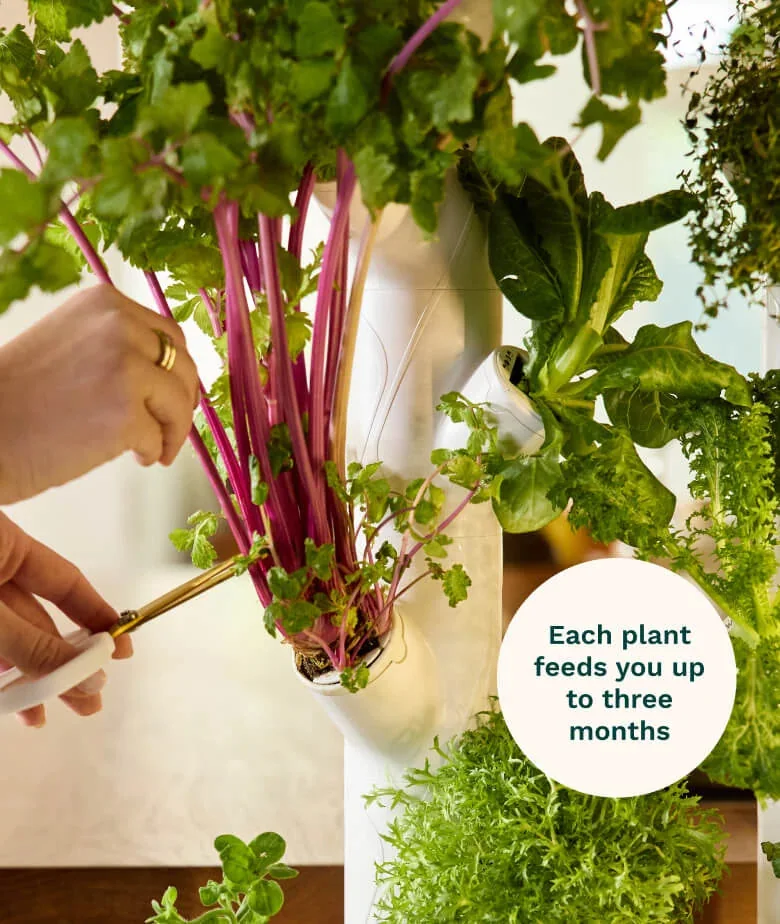
You buy the clamshell on Sunday because you intend to eat better. By Wednesday the leaves at the bottom have turned dark and translucent, the whole bag smells faintly of pond water, and you tip most of it into the bin. You feel briefly guilty. The following Sunday you buy another one.
Almost everyone treats this as a storage problem. A better crisper drawer. A paper towel in the bag. A different brand next time. It is not a storage problem. By the time that bag reaches your kitchen, most of its useful life is already behind it, and there is nothing you can do at home to give it back.
The company that makes the indoor growing columns you may have seen in someone's kitchen puts the mechanism plainly on its own mission page, which is unusual candor from a business that sells the alternative:
Produce is harvested several weeks before it's ripe and flown or trucked over long distances, making it nearly impossible to get truly fresh and nutritious foods. FX Rouxel, founder and CEO of Gardyn, in his signed letter on the company's mission page
Read that with the skepticism it deserves, because he is selling something. Then notice that no part of it is actually in dispute. It is a flat description of how salad reaches a shelf in a country this size.
Part oneThe clock starts the moment the leaf is cut
A head of lettuce is alive when it is harvested. Cutting it does not switch it off. It starts a countdown, and every step that follows is spent on that countdown rather than on you.
The leaf is cut in a field. It is cooled. It is trucked to a processing facility, washed, spun, sorted and sealed into a bag with a modified atmosphere designed to slow down what is already happening. It is palletized, cold trucked, warehoused, delivered, unloaded and stacked. Only then does it reach the aisle, where it waits again.
Gardyn's sustainability page gives the distance involved in one line: most produce travels thousands of miles, and a huge share of American produce is grown thousands of miles from the shelves that sell it. The bag you open on Wednesday did not begin to fail on Wednesday.
Supermarket greensthousands of miles
Field›Cut›Cooled›Washed›Bagged›Trucked›Warehouse›Store›Your fridge
Greens cut at homea few feet
Column›Plate
Gardyn's own phrasing for the second row: the furthest its produce will ever travel to your plate is across the kitchen.
The variety in your bag was chosen for the truck, not for you
This is the part that tends to land hardest, and it is hiding in plain sight on Gardyn's press page. The company describes its own plants as varieties selected for taste and nutrition, not transport and storage.
Read that backwards. It tells you exactly what the industrial supply chain has to optimize for instead. A variety that survives a cross country truck is being chosen for durability, uniformity and shelf life, because a variety that does not survive the truck never reaches a shelf at all. Flavor is welcome to come along if it happens to fit. It is not what the selection is for.
The same page states the harvest side of it just as bluntly: their plants are picked at the peak of ripeness, where the alternative is harvested underripe to withstand a long supply chain. Underripe is not an accident or a lapse in quality control. Underripe is the specification. A tomato picked ripe would not arrive.




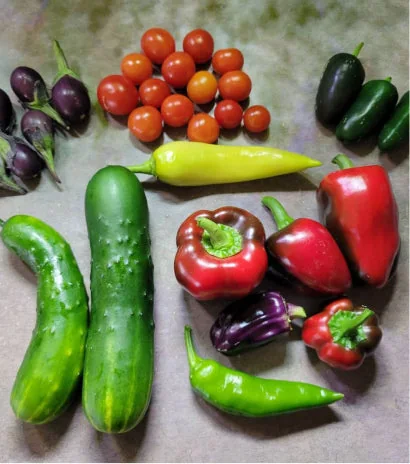
Four of the varieties in Gardyn's plant library, which runs to more than a hundred non-GMO options and includes heirlooms and rare culinary herbs the company says are not found in grocery stores.
Part threeWashing is the step that surprises people
Triple washed on the front of a bag is meant to reassure, and for most people it does. It is worth reading it the other way round. It tells you the leaves left the field in a state that required washing, that the washing happened somewhere else, by someone you will never meet, days before you opened the bag, and that from that moment on the only thing standing between the field and your bowl is a plastic seal.
Here is the same question answered about greens cut in a kitchen, from Gardyn's own help pages:
The beauty of Gardyn-grown produce is that you know your plants' origin. Since your Gardyn plants are all pesticide and herbicide free and grown in your home, you can feel comfortable snacking on plants directly from the Gardyn without washing them first. Gardyn, frequently asked questions
Which brings us to the thing nobody enjoys thinking about while making a salad.
Why the recalls keep coming from the same aisle
Nothing about a leaf of lettuce makes it uniquely dangerous. What makes bagged greens a recurring recall candidate is the shape of the supply that carries them. One field, one wash line and one packing shed can end up inside tens of thousands of bags across a dozen states within a few days. Centralized supply centralizes risk. When something goes wrong upstream it goes wrong everywhere at once, and by the time anyone knows, the only instrument left is a notice telling several million people to check the code printed on a bag they may already have eaten.
A column in a living room is not safer because it is clever. It is safer because it is small, and because the chain that feeds it has one link in it.
The only variable in the chain you can actually remove
You cannot make a truck faster. You cannot un-wash a leaf. You cannot buy back the weeks a head of romaine spent getting to you, and you certainly cannot fix any of it with a better container once it is in your kitchen. Every serious variable in this system sits upstream of the moment you have any say at all.
Except one. The distance is not a law of nature. It is a consequence of growing the food somewhere else, and it is the only part of the chain a household can delete outright.
Figures Gardyn publishes for its installed base
- 2,000,000 lbsof produce grown on its systems since 2020
- 62.4M gallonsof fresh water saved against outdoor growing
- 725,187 lbsof pesticides kept out of the food supply
- 1.9M lbsof food waste avoided
All four figures are published by Gardyn on its sustainability page, alongside the company's claim that 40 percent of American produce ends up in landfill and that indoor growing uses 95 percent less water.
What a five foot column of lettuce in a living room actually is
Strip away the marketing and the object is simple to describe. It is a vertical hydroponic tower, 24 inches wide, 12 inches deep and 64 inches tall, standing on two square feet of floor. It weighs 20 pounds and arrives in one box. There is no soil in it and it does not need a window.
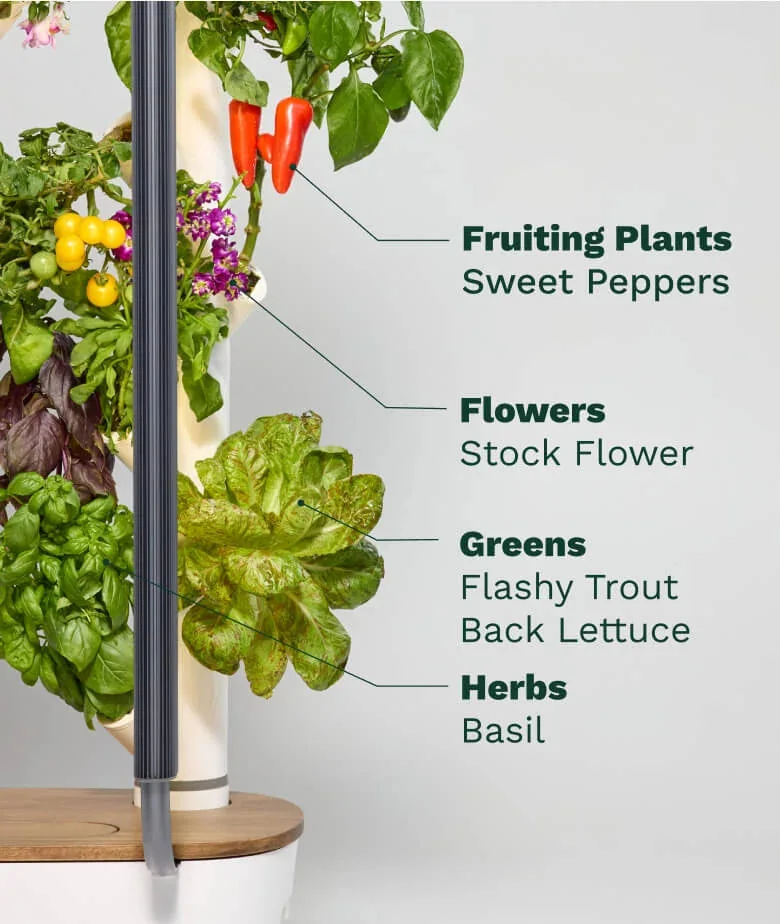
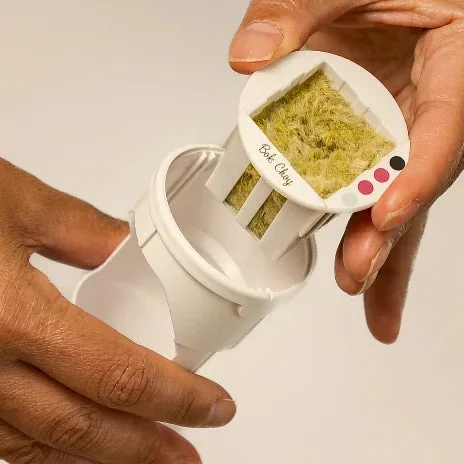
The plants sit in the wall of the column in pre-seeded pods the company calls yCubes: two to six non-GMO seeds nestled in rockwool inside a shell made from tapioca based compostable plastic. The columns themselves are food grade, BPA free, FDA compliant ABS. You push a pod into a slot. That is the entire planting operation.
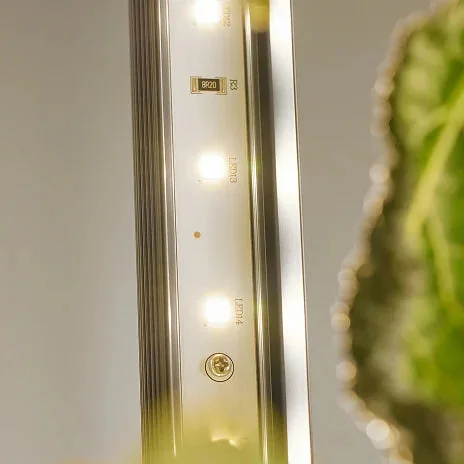
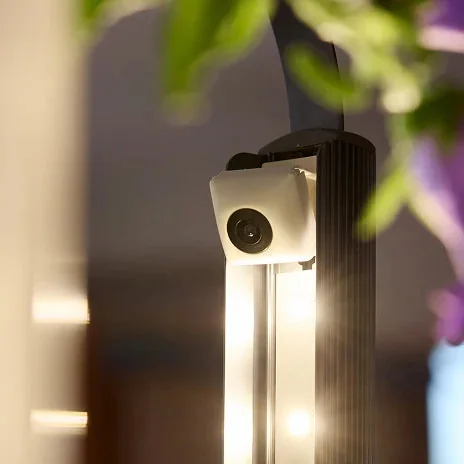
Water runs in a closed loop from a tank in the base, so the only water consumed is the water the plants drink. Gardyn puts the household usage at roughly four to six dishwasher loads a month, and 95 percent less than growing the same plants in soil. You top the tank up every one to two weeks and add plant food when you do.
The part that does the actual work is the monitoring. Sensors track water level, humidity and interior temperature. The two cameras photograph the plants every thirty minutes. An assistant the company calls Kelby reads all of it and turns it into a short list of things to do this week: top up the tank, trim the roots, pollinate that pepper, harvest the lettuce before it bolts. You can switch the cameras off, and Gardyn says plainly that doing so also switches off the monitoring.
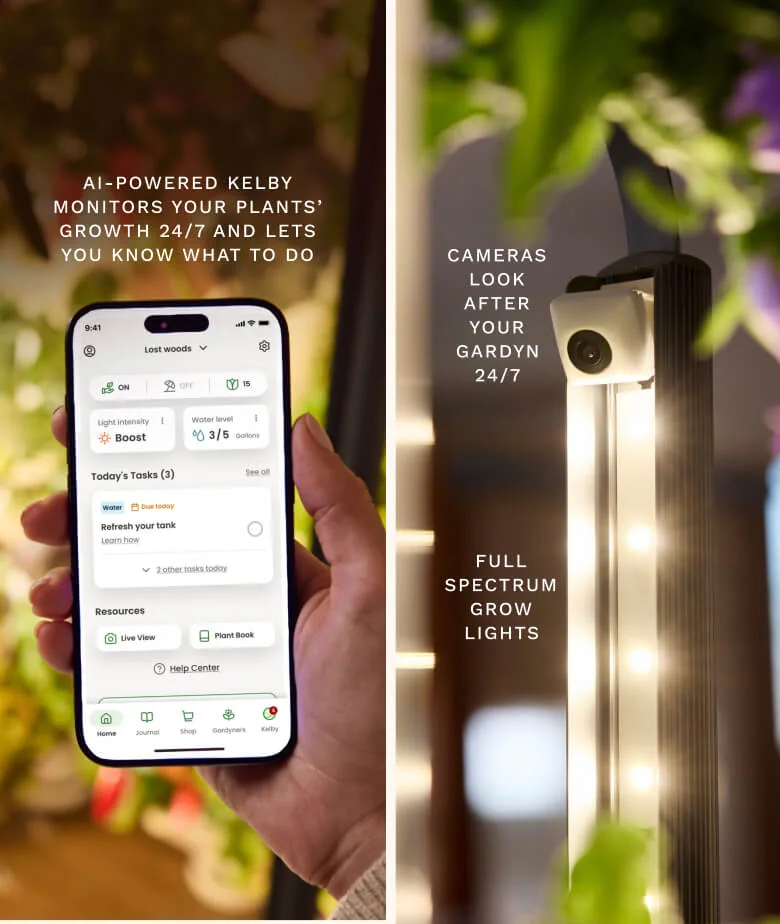
- Footprint
- 24 in wide, 12 in deep, 64 in tall. Two square feet of floor. 20 lb, ships in one box.
- Capacity
- 30 plants on the Gardyn Home 4. Gardyn sizes it for a household of three to four.
- Light and power
- Two 40 W full spectrum LED bars. Around 47 kWh a month.
- Water
- Closed loop. Tank holds up to five gallons, topped up every one to two weeks.
- Requirements
- A power outlet, a 2.4 GHz wifi network, and a room between 50 and 95 degrees Fahrenheit. No window needed.
The numbers people ask about before anything else
Two questions come up before all the others. How much food does it actually make, and how much of my week does it take.

8 to 10 lb of produce a month from a Gardyn Home, depending on what you choose to grow.

One pod, about three heads of lettuce. Romaine can be cut repeatedly over roughly four weeks rather than harvested once.

Herbs stay harvest-ready for up to 12 weeks, which is the part that quietly ends the supermarket herb pot cycle.
The clock on the first harvest is three to five weeks for most leafy greens, and lettuces reach full size in about three to four. Weekly upkeep is under fifteen minutes, which is a smaller commitment than the trip to buy the bag you are replacing. Setup takes most people under half an hour. If you go away, a vacation setting holds the system steady for up to two weeks.
Running cost is the number people brace for and it is smaller than expected. Gardyn publishes its own appliance comparison: about 59 dollars a year of electricity, against 61 for a dishwasher, 84 for a hot water heater and 150 for a refrigerator. The column costs about as much to run as the machine that washes the bowl.
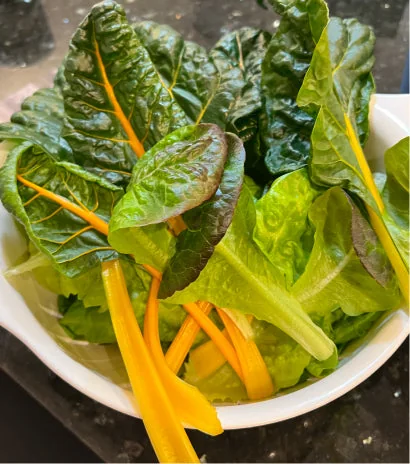
What it looks like in rooms that are not photo studios
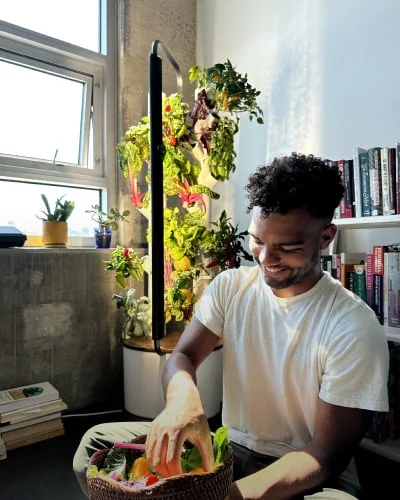
Gardyn says it has passed 100,000 households and six million plants sold, and its site carries a 4.8 out of 5 average across more than 900 reviews. Those are the company's own numbers. What is harder to manufacture is the photographs owners take of their own kitchens, which are the least flattering lighting a product ever gets.
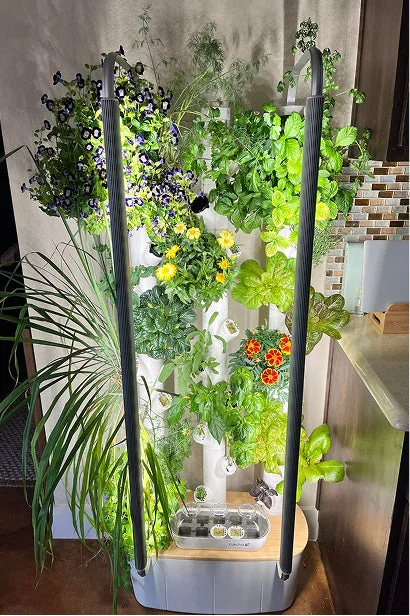
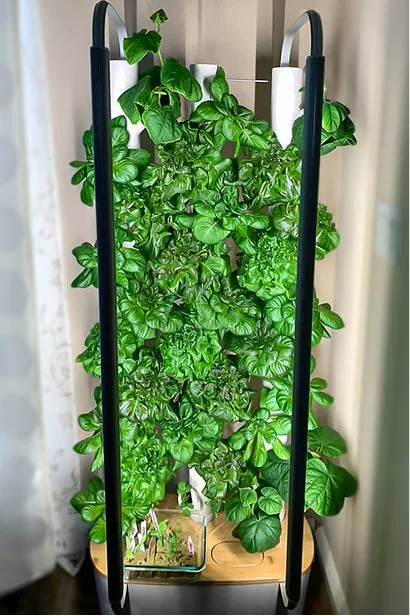
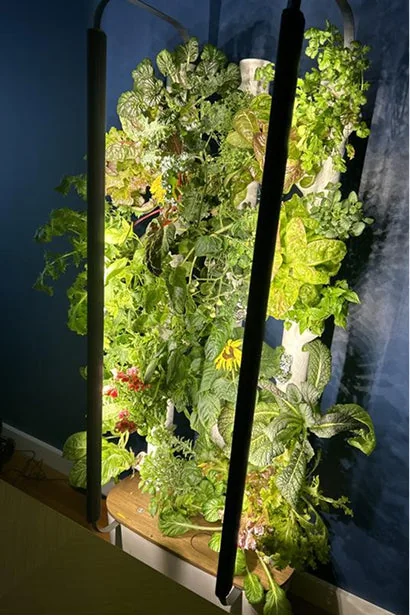
Haven't bought any lettuces for months! This thing has been amazing.
Beverly W., published on mygardyn.com
I love it and so does my family. I tell everyone that I meet and share pictures and my harvest. I tell them: I will never my buy lettuce from the grocery store again!
EmDeeDubz2.0, published on mygardyn.com, quoted as written
For two years, Gardyn has been in my life, empowering me to elevate my diet with fresh, homegrown ingredients. I love its compact design and beautiful aesthetic.
Gretchen, published on mygardyn.com
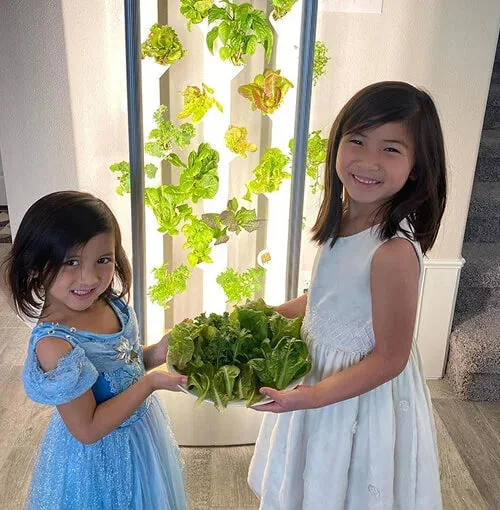
Gardyn makes one more claim on its press page that is worth reading as a claim rather than as a settled fact, and we are flagging it as such: the company states that research shows its lettuce carries more than 50 percent more nutrition than grocery organic. It does not publish the study alongside the line. Treat it as a company assertion. The rest of this page does not rest on it.
Part eightWho should not buy one
A page like this is more useful if it draws the line honestly, so here is where it sits.
It costs real money up front. The Gardyn Home 4 is 899 dollars, the smaller Studio 2 is 549. Both include a plant starter set, and Gardyn offers financing it advertises from 23 dollars a month, but the sticker is the sticker.
There is a membership. After a 30 day free trial it renews at 39 dollars a month for the Home and 25 for the Studio. The machine still runs without it. What you give up is Kelby's advanced tuning, the monthly plant credits, free shipping and the 60 percent member discount on additional pods, which is also where the ongoing economics live.
It has physical requirements. A permanent outlet, a 2.4 GHz network specifically, and a room that stays between 50 and 95 degrees. It is five feet tall and it lights up. In a small apartment it will be the most noticeable object in the room, which some people buy it for and others will not tolerate.
The arithmetic needs volume. If your household gets through one bag of greens a month, this will never pay for itself and you should not pretend otherwise. If you are buying organic salad, herbs and greens every week and throwing a third of it away, the sums look completely different.
Part nineWhere to start
There are two sizes, and the honest way to choose is by how many people you actually feed.
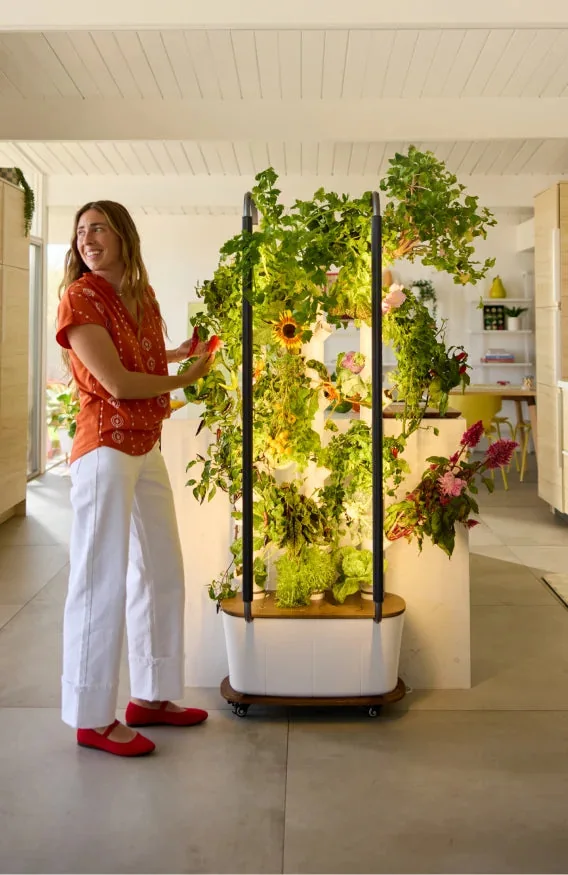
Gardyn Home 4
899 dollars
- 30 plants, 2 sq ft
- Sized for 3 to 4 people
- 8 to 10 lb a month
- Free 30-plant starter set
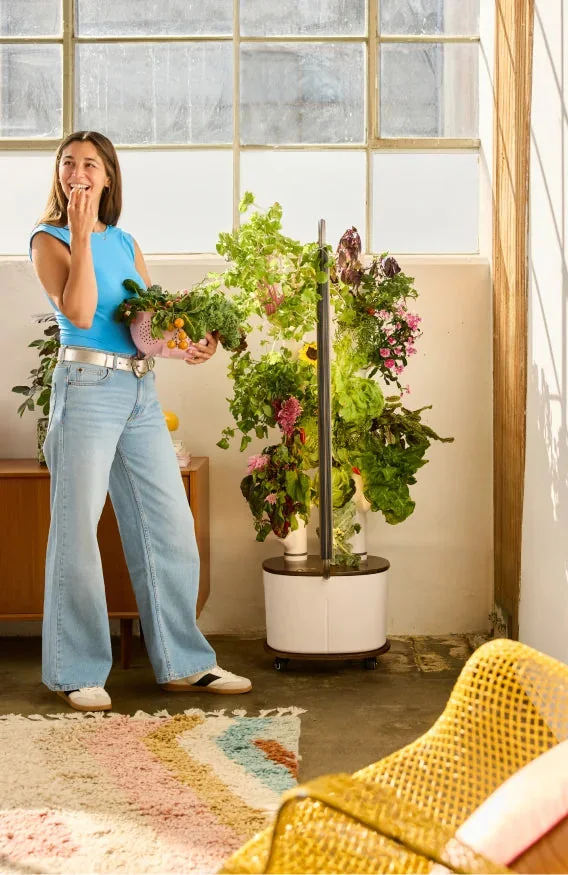
Gardyn Studio 2
549 dollars
- 16 plants, 1.4 sq ft
- Sized for 1 to 2 people
- Their current best seller
- Free 16-plant starter set
Both ship free within two days, carry a three year warranty, and come with a 90 day risk free trial that starts the day you pair the unit to wifi, with a full refund if you send it back. Gardyn is also HSA and FSA eligible through Truemed, which the company says works out at roughly 30 percent off using pre-tax funds.
Or compare it with the Studio 2 if you are feeding one or two people.
Back to the bag
None of this makes supermarket greens a scandal. Feeding a continent takes trucks, and the trucks impose everything described above: the underripe harvest, the variety bred for durability, the wash line hundreds of miles away, the recall that has to be broadcast because nobody can say which bag.
What it does mean is that the slime in the bottom of the bag was never a failure of your refrigerator. It was the end of a process that began weeks earlier, in a field you will never see, and the only lever any household has ever had over it is where the leaf is standing when it gets cut.
90 day risk free trial. See how it works or browse the 100+ plant library.